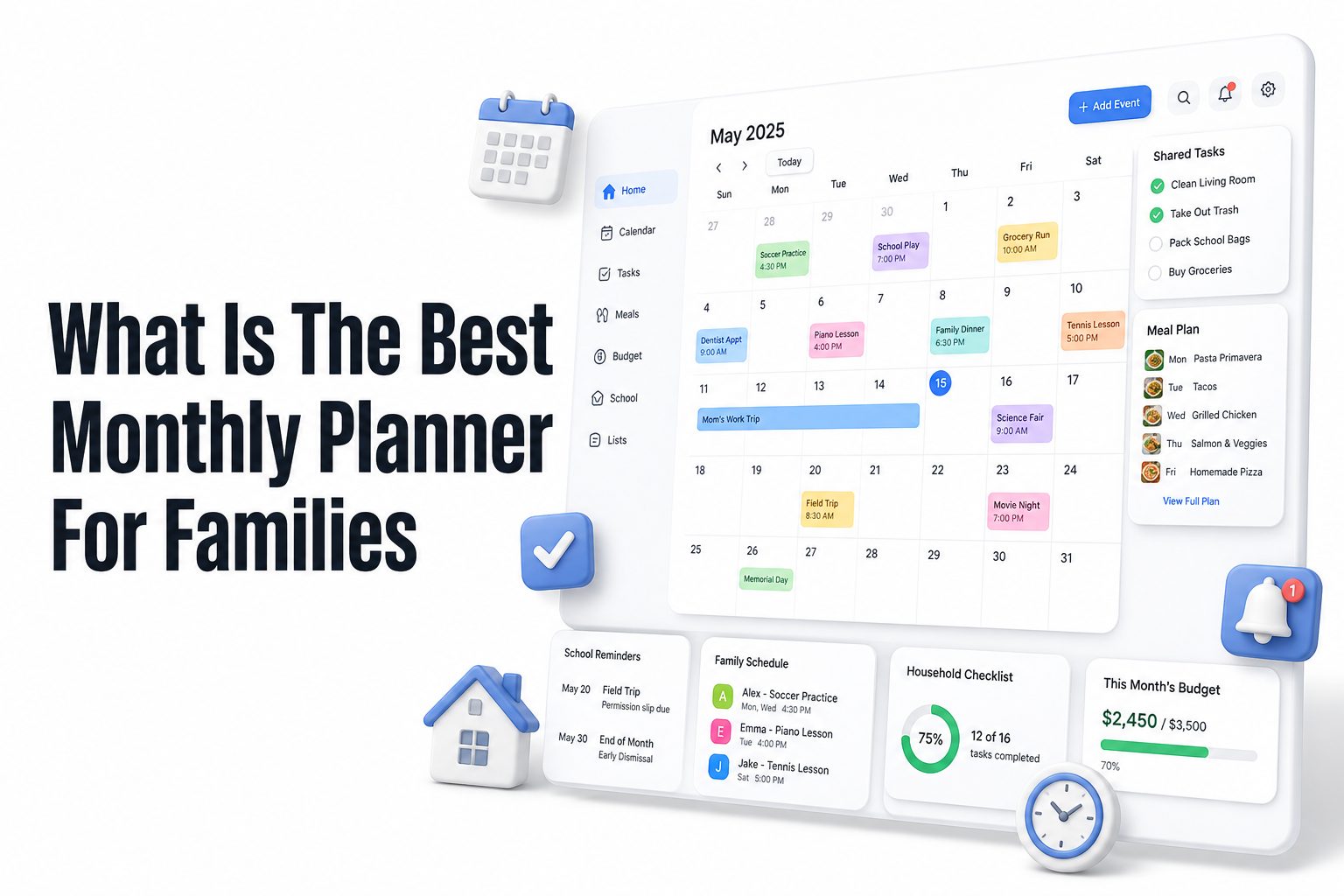
Busy households need more than a wall calendar with a few scribbled dates. Between school events, work shifts, sports practices, appointments, meal planning, bills, and family time, the right planning system can keep everyone moving in the same direction. That is why many parents search for what is the best monthly planner for families before buying yet another notebook, app, or magnetic calendar.
The best choice depends on how your household actually runs. Some families need a large visual calendar in the kitchen. Others need a portable planner with space for meals, errands, and reminders. Many do best with a mix of paper and digital planning. The goal is not to create a perfect schedule. It is to make daily life easier, reduce missed commitments, and give every family member a clear view of the month ahead.
Why Families Need a Monthly Planner
A monthly planner gives the whole household a shared view of what is coming. Weekly plans are useful, but a month-at-a-glance layout helps parents spot crowded weekends, school deadlines, travel dates, and appointment conflicts before they become stressful.
Families also need a planning tool that lowers the mental load. When birthdays, practices, grocery trips, and bills live in one visible place, fewer details sit in one parent’s head. That makes coordination easier and helps children become more responsible over time.
What Makes a Family Planner Different
A family planner is built around multiple people, not one person’s schedule. It needs room for names, color coding, recurring activities, meal ideas, school reminders, household tasks, and notes that affect everyone in the home.
The strongest family planners are easy to scan quickly. Parents should be able to check the day in a few seconds, while children can recognize their activities without needing long explanations. A good design supports fast decisions during busy mornings and evenings.
Key Features to Look For
- Large monthly calendar boxes with enough writing space
- Separate areas for each family member
- Meal planning space for dinners and grocery notes
- Color coding options for activities and appointments
- Durable pages, magnets, tabs, or wipeable surfaces
- Room for school dates, bills, chores, and reminders
- A layout that can be checked quickly by adults and children
- Portable or wall-mounted format based on family habits
Paper Monthly Planners for Families
Paper planners work well for parents who like writing things down and reviewing the month without opening an app. They are especially useful for meal planning, school forms, errands, and home routines that benefit from notes beside the calendar.
The best paper option usually has a two-page monthly spread, a notes column, and sturdy tabs. Families with several children may prefer planners with wider boxes or dedicated family sections. A compact personal planner can feel too crowded for household scheduling.
Wall Calendars and Command Center Planners
A wall calendar is often the easiest answer for families that need shared visibility. When the planner hangs in the kitchen, hallway, or mudroom, everyone can see practices, appointments, school events, and weekend plans without asking one person.
Command center planners go further by adding sections for chores, meals, papers, and reminders. These systems work best when placed where the family naturally passes every day. Visibility matters more than style when the planner is meant to guide real routines.
Planner Type Comparison
Planner Type | Best For | Main Strength | Possible Drawback
Paper monthly planner | Parents who like writing details | Portable and flexible | Can be hidden in a bag
Wall calendar | Whole-family visibility | Easy for everyone to check | Limited space for notes
Dry erase planner | Changing schedules | Reusable and quick to update | Can smudge or get messy
Digital calendar | Shared alerts and mobility | Syncs across phones | Less visible at home
Hybrid system | Busy households | Combines visibility and reminders | Requires consistency
Digital Monthly Planners for Families
Digital planners are useful for families with changing schedules, older children, shared custody arrangements, or parents who travel for work. Shared calendars can send reminders, update instantly, and keep everyone informed when plans change during the day.
The downside is that digital planning can become invisible. If children do not check the app, or parents ignore notifications, important dates still get missed. Digital calendars work best when paired with a visible home calendar for the most important monthly events.
Dry Erase and Magnetic Family Planners
Dry erase and magnetic planners are popular because family schedules change often. A canceled practice, new appointment, or adjusted work shift can be updated quickly without messy crossed-out notes or wasted paper.
These planners are best for families who want a clean monthly view in a shared space. Look for strong magnets, enough writing room, and markers that do not stain. A notes section for meals or reminders adds practical value.
Tips for Choosing the Right Format
- Choose a wall planner if everyone needs daily visibility
- Choose paper if one parent manages detailed household planning
- Choose digital if schedules change often outside the home
- Choose dry erase if your month gets revised frequently
- Choose hybrid if you need both reminders and a visible home base
- Avoid tiny calendar boxes if you have more than one child
- Pick function before style, especially for school-year planning
Monthly Planner Layouts That Work Best
The best family layouts show the full month clearly, with enough room for names and short details. A cramped layout creates confusion, especially when several people have commitments on the same date.
Look for layouts with a side column for priorities, bills, errands, or meal notes. Families often need more than appointment space. A planner becomes more useful when it also supports the small tasks that keep the household running.
Color Coding for Family Schedules
Color coding makes a monthly planner faster to read. Each family member can have a color, while another color can mark bills, school deadlines, travel, or medical appointments. This helps everyone identify relevant items quickly.
The system should stay simple. Too many colors can make the planner harder to use. Four to six consistent colors are usually enough for most households, especially when paired with short labels and clear handwriting.
Smart Color Coding Ideas
- Blue for one parent’s work or travel
- Green for school dates and assignments
- Red for medical appointments or urgent reminders
- Purple for sports, lessons, and clubs
- Orange for bills, payments, and deadlines
- Black for shared family events
- Gray for flexible tasks or reminders
Meal Planning Inside a Monthly Planner
Meal planning is one of the most practical additions to a family planner. Seeing dinners across the month helps parents shop more efficiently, reduce last-minute takeout, and plan around late practices or evening meetings.
A monthly meal plan does not need to be strict. Families can use it to list theme nights, freezer meals, or easy options for busy days. Even a loose dinner plan can make weeknights feel more manageable.
School, Sports, and Activity Planning
School schedules can overwhelm a basic calendar. Picture days, early dismissals, field trips, project deadlines, parent meetings, and fundraisers all compete for space. A planner with roomy date boxes helps keep those details visible.
Sports and activities add another layer. Practices, games, uniforms, snacks, and transportation all need planning. Families may benefit from a notes column where they can write carpool details, equipment reminders, or location changes.
Helpful School and Activity Reminders
- Mark early dismissals at the start of each month
- Add project due dates as soon as they are assigned
- Write sports locations, not just game times
- Note who is driving when transportation is shared
- Add uniform, instrument, or equipment reminders
- Review the next week every Sunday evening
- Keep school calendars near the family planner for updates
Best Monthly Planner for Large Families
Large families need extra space, clear labels, and a system that separates people without clutter. A small planner may look neat at first, but it usually fails once several children have activities on the same day.
For larger households, a wall calendar or oversized paper planner often works best. Choose wide boxes, durable materials, and a place for each family member’s recurring commitments. A shared digital calendar can handle alerts while the wall planner keeps the big picture visible.
Best Monthly Planner for Working Parents
Working parents often need a planner that balances professional commitments with family life. School pickups, meetings, travel, childcare, deadlines, and household errands must fit together without constant back-and-forth checking.
A hybrid system is often the most reliable option. Use a digital calendar for work and shared alerts, then transfer key family events to a monthly home planner. This keeps the household aligned while still protecting the detail needed for work schedules.
Family Planner Options by Household Type
Household Type | Best Planner Style | Why It Works
Families with young kids | Wall or magnetic planner | Children can see routines visually
Families with teens | Shared digital plus wall calendar | Teens can receive alerts
Large families | Oversized monthly planner | More writing room for each person
Working parents | Hybrid paper and digital | Balances home and work demands
Homeschool families | Academic monthly planner | Tracks lessons, outings, and deadlines
Blended families | Shared digital calendar | Easier updates across homes
Planner Size and Placement
Size matters more than many families expect. If the calendar boxes are too small, the planner becomes difficult to maintain. Families should choose a size based on the number of people, not the amount of wall space available.
Placement also affects consistency. A planner hidden in an office is less useful than one placed near backpacks, keys, lunch boxes, or the kitchen. The best planner becomes part of the household traffic pattern.
How to Keep the Planner Updated
A family planner only works when it becomes a habit. Choose one weekly time to update it, such as Sunday evening or Monday morning. Add school emails, sports schedules, appointments, and meal ideas before the week begins.
Daily check-ins should be quick. A parent can glance at the planner during breakfast, while children check their own activities. The goal is not long planning sessions. It is steady, simple maintenance that prevents missed details.
Weekly Planner Maintenance Checklist
- Add new appointments from emails and school notices
- Review sports and activity schedules
- Confirm transportation and pickup plans
- Add meal ideas for busy nights
- Mark bills or payment deadlines
- Remove canceled events from dry erase or digital calendars
- Check the following weekend for conflicts
- Ask children to review their own activities
Common Family Planning Mistakes
One common mistake is choosing a planner that looks attractive but does not fit daily life. A beautiful planner with tiny boxes, vague sections, or poor placement will not help a busy family stay organized.
Another mistake is making the system too complicated. If every event requires symbols, labels, colors, and multiple updates, the planner becomes a chore. A good family planning system should be easy enough to maintain during a packed week.
Paper Versus Digital Planning
Paper planning helps families see the month without screens. It is excellent for visual thinkers and younger children. It also creates a clear home base where meals, chores, and reminders can sit beside calendar events.
Digital planning is better for alerts, changes, and coordination between adults. The strongest answer is often not paper or digital, but both. A visible monthly planner can handle the family overview while digital tools manage reminders and updates.
Practical Rules for a Planner That Lasts
- Keep event descriptions short and clear
- Use consistent names or initials for each person
- Do not overcrowd date boxes with long notes
- Move detailed lists to a notes section
- Review the planner at the same time each week
- Keep markers, pens, or stickers beside the planner
- Remove outdated papers from the planning area
- Let children add age-appropriate reminders
Budget-Friendly Monthly Planner Choices
A good family planner does not need to be expensive. Many families do well with a simple wall calendar, colored pens, and a small notebook for meal planning. The most important factor is whether the system gets used consistently.
If your budget allows, investing in a durable planner can be worthwhile. Laminated calendars, quality binding, strong magnets, and thick paper can make daily use easier. For more household organization ideas, see [Internal Link: Family Organization Tips].
Premium Planner Features Worth Considering
Premium planners can be helpful when they solve real problems. Features like habit trackers, budget pages, meal planning spreads, sticker sheets, and removable tabs can support family routines when used regularly.
Still, more features do not always mean better planning. Before paying more, ask whether each feature fits your household. A planner should simplify decisions, not add pages that no one has time to maintain.
Features That Are Often Worth Paying For
- Thick paper that prevents ink bleeding
- Monthly tabs for quick navigation
- Large calendar boxes
- Built-in meal planning pages
- Durable cover or magnetic backing
- Pocket folders for school forms
- Reusable dry erase surface
- Extra notes pages for household reminders
How Children Can Use a Family Planner
Children benefit from seeing schedules in a clear, predictable place. Even young kids can recognize colors, simple words, or stickers for school, sports, birthdays, and family events. This helps them feel prepared for what is coming.
Older children can take more responsibility by adding assignments, practices, and social plans. A family planner can teach time awareness without long lectures. It gives children a practical way to see how commitments fit into the month.
Planning for Meals, Chores, and Errands
Family scheduling is not only about appointments. Meals, chores, and errands shape the rhythm of the week. A monthly planner with space for these items helps parents plan around busy evenings and avoid repeated last-minute decisions.
For example, a late practice night might need a slow cooker meal, while a free Saturday morning can handle errands. Linking calendar events with household tasks makes the planner more useful. You may also find [Internal Link: Monthly Meal Planning Ideas] helpful.
Simple Ways to Involve the Whole Family
- Let each person choose a planning color
- Ask children to add birthdays or activity dates
- Review the month during a short family meeting
- Keep the planner where everyone can reach it
- Assign one person to check school updates
- Use stickers or symbols for younger children
- Celebrate open weekends by keeping them protected
The Best Monthly Planner Setup for Most Families
For most households, the strongest setup is a large monthly wall planner paired with a shared digital calendar. The wall planner gives everyone a visible overview, while the digital calendar provides reminders and updates when plans change.
This combination answers the practical needs behind what is the best monthly planner for families. It supports children, helps parents coordinate, and keeps the month visible. The exact brand matters less than space, clarity, placement, and consistent use.
How to Choose Before You Buy
Before buying, list the top three problems your planner needs to solve. Missed school dates, chaotic dinners, forgotten appointments, and unclear transportation plans each point toward a slightly different format.
Then consider who will use the planner daily. If only one parent will maintain it, a paper planner may be enough. If everyone needs to see it, choose a wall or magnetic option. If schedules change often, add digital reminders.
Buying Decision Checklist
- Count how many people need calendar space
- Decide whether the planner must be visible to everyone
- Check if meal planning space is necessary
- Look for large boxes and clear monthly views
- Choose paper quality or dry erase durability carefully
- Make sure the layout supports color coding
- Pick a location before buying a wall planner
- Avoid extra features your family will not use
Conclusion
The right family planner should make life easier, not create another task to manage. For many homes, the best solution is a large monthly planner placed in a busy shared area, supported by a digital calendar for alerts and last-minute changes. This gives parents the detail they need while helping children see what is ahead.
When deciding what is the best monthly planner for families, focus on visibility, writing space, simple color coding, and steady weekly updates. A planner that matches your household habits will always beat one with fancy pages that no one uses. Start with the problems you need to solve, choose a format that fits your routines, and keep the system simple enough to maintain during real family life.
FAQ
What size monthly planner works best for families
Most families do best with a large wall planner or oversized monthly spread. Bigger date boxes leave room for multiple names, activities, meal notes, and reminders without making the calendar hard to read.
Are digital planners good for family scheduling?
Digital planners work well for alerts, shared updates, and schedule changes. They are especially useful for working parents and teens, but many families still need a visible wall planner at home.
How often should a family planner be updated?
A family planner should be updated once a week, with quick daily checks. Sunday evening works well for reviewing school notices, meals, appointments, sports schedules, and transportation plans.
Should each family member have a separate planner color?
Yes, color coding can make the planner easier to scan. Give each person one color and use one or two extra colors for bills, school deadlines, or urgent reminders.
Is a paper or dry erase planner better for families?
Paper is better for detailed notes and long-term records. Dry erase works better for changing schedules. Families with frequent updates often prefer dry erase, while planners who like records may prefer paper.
0 Comments